
Prime Minister Narendra Modi and visiting Turkish President Recep Tayyip Erdogan held comprehensive discussions and took stock of full range of bilateral relations, including political and economic.
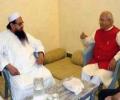
'There are all sorts of characters moving around acting as unofficial representatives of the government and engaging in their own personal foreign policy initiatives. Clearly, the government needs to shut these characters down if it wants to continue enjoying any credibility, both domestically and internationally,' says Sushant Sareen.

CBI sources said a case has been registered against UK-based NRI Vipin Khanna, whose named had also figured in another defence deal probed by the agency. They said the kickbacks were allegedly paid in 2009 through subsidiaries of Embraer via a Singapore based company which is owned by the middleman.
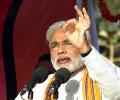
'Both reflect prejudice and short-sightedness peculiar to Mr Modi's way of thinking.'
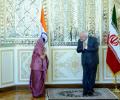
India's low passion, very cautious, relationship with Iran of the last 36 years awaits transformation, says Lieutenant General Syed Ata Hasnain (retd). Prime Minister Modi's visit cannot be a negotiating event; it is a symbolic one to strengthen the politico-diplomatic relationship.

'We have leaders who would rather that we cohabit with the Indian Mujahedeen than fight terror, as long as the payoffs are there in the next polls... Obviously, we are not headed down the best route to keep terror at bay,' says Brigadier S K Chatterji (retd).

'The voter thinks that the State is not going to impartially deliver services, provide justice, basic law and order, social insurance -- so as a voter it's very rational that I may choose a criminal who will help me navigate the State.' 'A weak State allows a criminal politician to be the person who provides that guarantee to mediate whatever problem the citizen has with the State.'

Domestically, China's 'strike hard' policy is alienating Uighurs further in Xinjiang. China's quid pro quo with the Taliban is hardly any lasting solution to the Afghanistan crises or to regional security, says Srikanth Kondapalli.
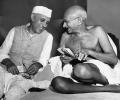
'How come with Nehru at the helm, India missed so many buses? He had such unchallenged power that he could have taken the country in any direction he wanted. The sad conclusion is inescapable that Nehru let things drift in true Hamletian ambivalence,' says B S Raghavan.

Today when we see the man behaving in a controlled, almost genteel fashion, creating a government with Prussian efficiency, colonising Delhi with a strange silence of expectation, one must ask is this Modi? Or is Modi all the trails he has left behind?'

In perhaps the first major conference on the United States-India strategic partnership in the aftermath of the Khobragade controversy that plunged the bilateral relationship in a downward spiral and is now in the process of being resurrected, the undeniable consensus among the panelists and participants was that much ballyhooed strategic convergence between Washington and New Delhi has dissipated.

Top 20 images of all the events of the week that was.

Prime Minister Narendra Modi's visit to South Korea is considered essential in strengthening defence ties, enhancing economic cooperation and forging cultural ties between the two countries, says Dr Rahul Mishra
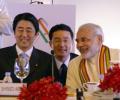
'Both nations have a common problem: A rampaging, jingoistic and hostile China which is making substantial territorial claims. In the long run, Japan and India are going to be the victims of Chinese aggression -- so they might as well hang together to contain China,' argues Rajeev Srinivasan.

'Why not ask for a change of leadership in Qatar, Bahrain or Saudi Arabia? Is there a constitution in Saudi Arabia? Are there elections in Saudi Arabia? Why no talk of democracy in these countries?' 'America said change the leader now, but is now ignoring the feelings of the Syrian moderate majority. Is that democracy,' asks H E Dr Riad Abbas, Syrian ambassador to India, in an interview to Cleo Paskal.

'Over one million people served in various battlefronts during World War I. And yet, even today, we know so very little about them.' 'It is absolutely essential to acknowledge this part of India's colonial history,' Santanu Das tells Vaihayasi Pande Daniel/Rediff.com
